A320 Type Rating: Requirements, Cost & Training Locations
Date
March 4, 2025
Time to read
5
Minutes
What is A320 Type Rating?
The A320 type rating is a mandatory certification for pilots who wish to operate the Airbus A320 aircraft.
The Airbus A320 is a prominent choice among both regional and legacy carriers, renowned for its versatility and efficiency.
With the global demand for Airbus A320 pilots growing, obtaining an A320 pilot certification significantly enhances career opportunities. Airlines worldwide demand certified A320 pilots, making this training an essential step for commercial aviators.
Understanding the A320 family
The Airbus A320 Family includes the A318, A319, A320 and A321, all built on a common platform designed to support strong operational commonality across the family. Airbus also distinguishes between two engine generations: the ceo (Current Engine Option) and the neo (New Engine Option), which is useful context for pilots planning their first narrow-body type rating or evaluating long-term fleet relevance.
How to Get an A320 Type Rating
Pilots must follow a structured process to obtain an A320 type rating, which includes meeting prerequisites, completing training, and passing assessments.
Pre-Requisites:
Valid Airline Transport Pilot Licence (ATPL) or Commercial Pilot Licence (CPL) (as per EASA or DGCA requirements).
As per EASA guidelines: Theoretical ATPL is required for CPL holders.
As per DGCA India guidelines: A DGCA-issued Commercial Pilot License (CPL) must be valid during the course tenure.
Minimum Hours as Pilot in Command (PIC):
As per EASA guidelines: Minimum 70 hours for the first Type Rating (TR).
As per DGCA India guidelines: Minimum 100 hours as PIC and a total of 200 flying hours. Additionally, minimum 25 hours on a multi engine aircraft.
Instrument Rating (IR):
As per EASA guidelines: Multi-Engine Instrument Rating (ME-IR) Certificate of Completion with Performance-Based Navigation (PBN).
As per DGCA India guidelines: Instrument Rating (IR) for single-engine aircraft.
Multi-Crew Cooperation (MCC) Certificate of Completion:
As per EASA guidelines: required for first Type Rating under EASA regulations
As per DGCA India guidelines: required for multi-engine aircraft.
Advanced Upset Prevention and Recovery Training (UPRT): Applicable for the first Type Rating under EASA. For DGCA it is based on the needs and requirements of the airline.
Medical Certification: Valid Class 1 Medical Certificate as per EASA or DGCA standards.
English Language Proficiency (ELP): Level 4 proficiency (as required by both EASA and DGCA).
Training Process:
Ground School: These sessions cover aircraft systems, avionics, and emergency procedures. They are often conducted theoretically using an online platform making it easy for pilots to learn at their own pace. At Simaero, we conduct the A320 online training on our e-learning platform - Wisdom, which is available 24/7.
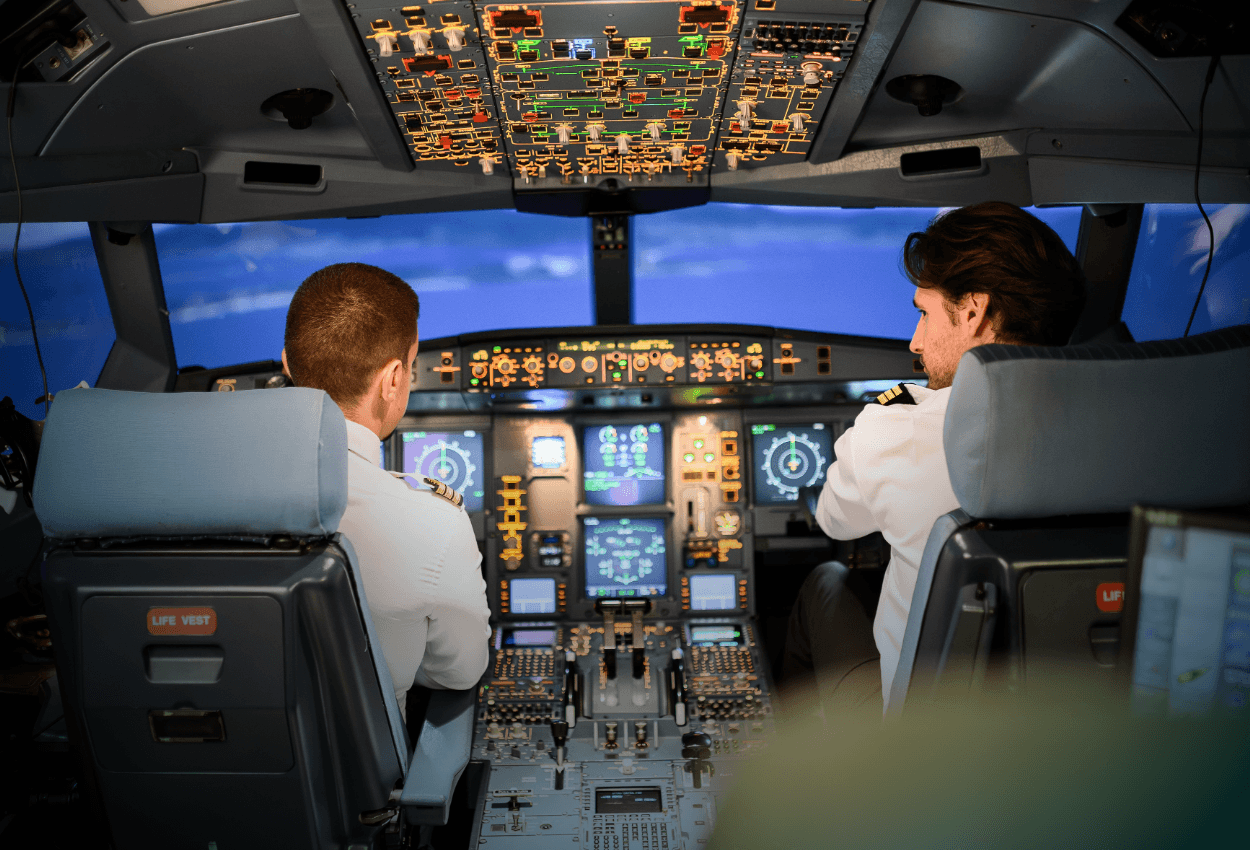
Simulator Training: This is the phase where pilots get hands-on experience in the A320 full-flight simulator and allows them to practice handling the aircraft in various scenarios, enhancing their skills.
Base Training: This phase involves conducting real-world flights, equipping pilots with essential practical experience. A320 base training offers exposure to real-life scenarios, ensuring comprehensive readiness for operational duties. In most cases, base training is conducted by the airlines depending on their needs and requirements.
Selecting a credible A320 type rating provider is crucial to ensure comprehensive and high-quality training.
EASA Requirements vs DGCA Requirements for Indian Pilots
EASA (European Union Aviation Safety Agency) and DGCA (Directorate General of Civil Aviation - India) have distinct regulations governing A320 type ratings.
Pilots should carefully evaluate their career goals and where they intend to work before choosing between EASA or DGCA training, as it can significantly impact employment opportunities and long-term career trajectories.
For those aiming to work in Europe or with international airlines, an EASA certification offers broad acceptance across multiple countries. Conversely, pilots planning to join Indian carriers or work within India should prioritize DGCA training to meet local regulatory requirements. Moreover, this decision may also influence the recurrent training requirements pilots must meet, as EASA and DGCA have differing standards and frequencies for maintaining operational proficiency.
How to Evaluate an A320 Training Center?,
Selecting the right A320 training center is not only about location. It should also reflect the regulatory path you are following,the relevance of the simulator to your intended aircraft family, and the practical conditions that will shape the training experience.
Approval Path: Choose a training center that is aligned with the authority and licence pathway relevant to your qualification objective, so the course structure, documentation and approvals are suitable for your training route.
A320 Family Relevance: Make sure the training environment is relevant to theA320 Family context you are preparing for, including the broader family logic and, where applicable, the distinction between ceo and neo variants.
Simulator Qualification: Review the simulator qualification level and the overall training environment to ensure they support the standards expected for structured airline pilot training on a commercial narrow-body aircraft.
Location and Support: Practical factors also matter. Airport accessibility,accommodation options, day-to-day logistics and the general training environment can all influence how smoothly your course runs from start to finish.
Top Locations for A320 Training
Europe: Europe is one of the best places to get an EASA A320 type rating, known for its world-class facilities and EASA approved certification standards. Its central position in the global aviation network provides seamless access to major airlines and aviation hubs, making it ideal for international pilots seeking career mobility and recognition. With multiple high-quality training centers spread across the continent, A320 type rating in Europe is highly sought after for its comprehensive and globally recognized programs.
India: India stands out for its DGCA-certified A320 type rating programs, catering specifically to pilots in South Asia. India’s strategic location and growing aviation sector provide strong demand for skilled pilots, making local training highly relevant. A320 type rating in India is particularly advantageous for pilots who are looking for regional training options, with competitive pricing at top-notch facilities with experienced trainers.
United States of America: The United States is a premier destination for obtaining an A320 type rating, offering FAA-approved training programs recognized globally. With its advanced aviation infrastructure and strong airline industry, the U.S. provides access extensive career opportunities. The country’s well-established training centers meet both domestic and international airline requirements. A320 type rating in the USA is an excellent choice for pilots seeking comprehensive training with a pathway to careers in both North American and global airlines.
A320 Type Rating Validity and Certification
An A320 type rating is valid for 12 months and requires recurrent training for renewal.
Renewal Requirements:
Periodic simulator training to maintain proficiency.
Compliance with either EASA or DGCA regulatory standards.
Airline-specific training programs for operational readiness.
Staying up to date with recurrent training is crucial for pilots to retain their A320 pilot certification.
Why Choose Simaero for A320 Type Rating?
Simaero is a leading provider of A320 type rating training, offering world-class facilities and globally recognized certifications.
We offer:
Type rating courses that are both EASA approved and as per DGCA guidelines
Modern Level D Full-Flight Simulators
Highly qualified and experienced Instructors
Access to a global aviation network
Kickstart your aviation journey with Simaero’s A320 type rating courses and unlock new opportunities in your pilot career. Explore our A320 type rating course today!
Frequently Asked Questions
Do all A320 Family aircraft belong to the same family group?
Airbus identifies the A318, A319, A320 and A321 as the four core aircraft types in the A320 Family, all built on a common platform to support operational commonality.
What is the difference between the A320 ceo and the A320 neo?
Airbus distinguishes the ceo as the original engine generation and the neo as the new engine option with upgraded engines, improved fuel efficiency and lower emissions.
What official prerequisites should I check before an A320 type rating?
Under EASA Part-FCL, pilots should verify their PIC experience, IR status, ATPL theory status and multi-engine experience and MCC status before starting a first multi-pilot airplane type rating.
Why is A320 Family context useful before choosing training?
Understanding the A320 Family helps pilots see where the aircraft sits in commercial aviation and how the family is structured,including its common platform and ceo / neo generations.
About Simaero
Simaero is a world-leading provider of pilot training on full-flight simulators and simulation engineering solutions. In global aviation, change is a constant. We promise to be a straightforward and continual presence in the complex training requirements of international airlines and pilots. With five training centres strategically located in France (headquarters), South Africa, China and India, Simaero trains over 5,000 pilots every year from 250+ civil and military carriers and 80+ countries. Our simulator fleet and training solutions cover the main commercial aircraft types, including Airbus, Boeing, ATR, and Embraer.



.png)