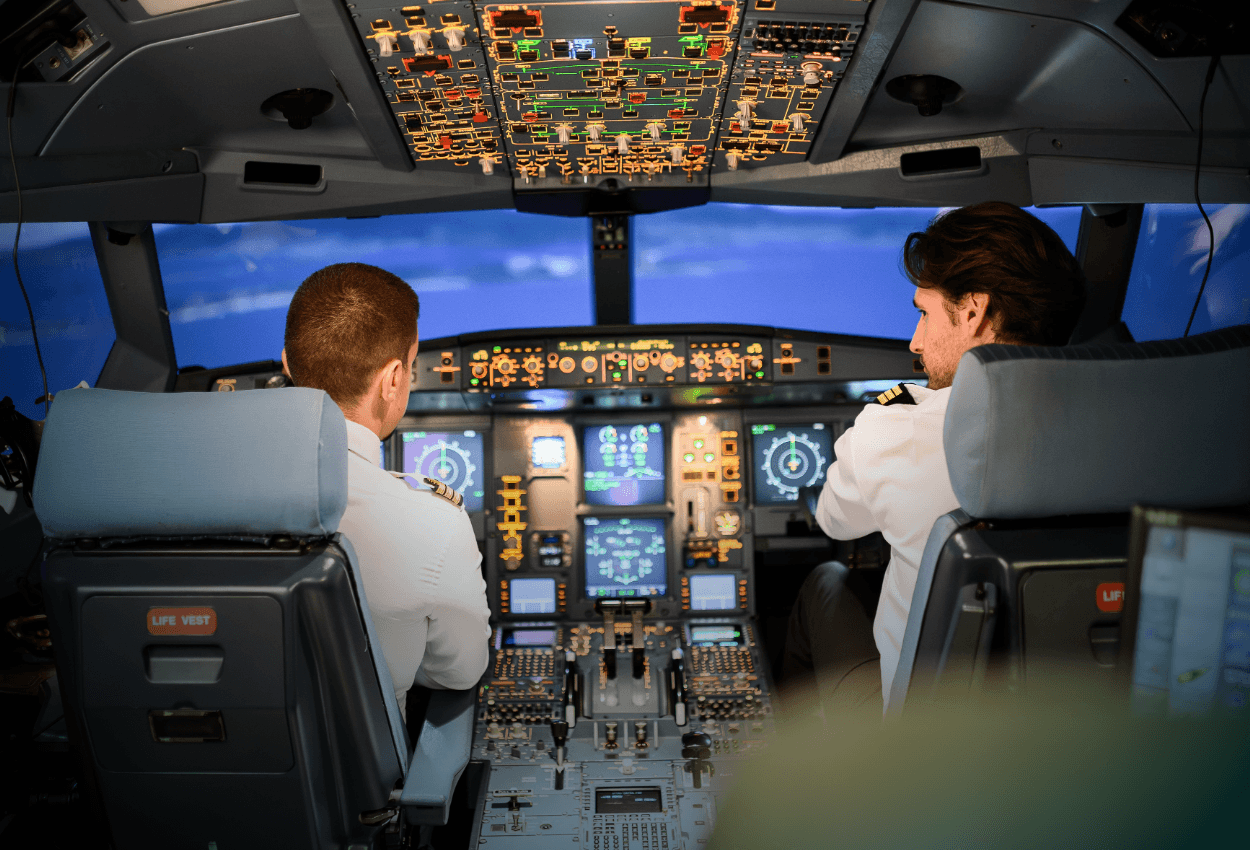
Today, flight simulator training has become an integral part of pilot development. These sophisticated devices allow pilots to hone their skills on the ground in realistic environments, which is vital as airlines face a growing demand for qualified pilots.
In fact, forecasts show a need for over 600,000 new pilots in the next 20 years, making high-quality training more important than ever.
Flight simulators play a significant role in meeting this demand, offering a safe, controlled setting for pilots to learn and practice – ultimately upholding the highest standards of safety in modern aviation.
A pilot training flight simulator (often called a Full Flight Simulator, or FFS) is essentially a full-scale replica of an aircraft’s cockpit mounted on a multi-axis motion system. The simulator’s displays, controls, and even sounds are modeled after the real aircraft, so when a pilot steps inside, they interact with it just as they would in the actual plane. This immersive setup allows pilots to practice flying procedures, maneuvers, and emergency drills without ever leaving the ground.
Importantly, simulator training can range from basic devices (for procedural or limited training) to Full Flight Training Simulators that offer the highest fidelity experience. Regulatory bodies like EASA and FAA categorize simulators by levels (A through D in increasing complexity): a Level D FFS is the most advanced, featuring full motion, high-definition visuals, and precise flight modeling.
Moreover, in some cases, Level D simulators are so realistic that pilots can complete an entire aircraft type rating in them without flying the real aircraft – a process known as “zero-flight-time training (ZFTT)”.
Aspiring and seasoned pilots alike benefit immensely from simulator-based training. Some of the top advantages include:
What can a pilot expect when walking into a flight simulator training center? These facilities are designed to support intensive learning and practice in a professional environment. Typically, a flight simulator training center (often part of an airline training academy or an independent provider) includes several key components:
Another crucial element inside a simulator training center is the people – specifically, the instructors and examiners. The role of instructors in pilot simulator training cannot be overstated. During a session, the instructor can introduce new threats (like sudden engine failure), observe how the crew handles it, and provide immediate feedback. They act as both coach and assessors, guiding pilots through learning objectives and ensuring training standards are met. After the session, instructors facilitate the debrief, pointing out any weaknesses and reinforcing strength competencies. This expert oversight is what “turns a sophisticated video game into a serious training device, so to speak.
In addition, centers have simulator technicians and support staff who keep the devices running smoothly and assist with scheduling. Together, the high-tech equipment and the human expertise create an effective training ecosystem.
The demand for pilot training is rising worldwide, driving the growth of simulator training centers on nearly every continent. For instance, Boeing’s latest 20-year outlook notes that more than half of new pilot demand will come from regions like Eurasia, China, and North America, with South Asia and Southeast Asia seeing the fastest growth in pilot needs. This global need for pilots translates into a global need for simulators and training infrastructure.
One outcome of this trend is that many pilots train abroad for specialized courses like type ratings or recurrent checks. If a particular aircraft simulator isn’t available in their home country, airlines and individuals will send pilots to training centers overseas.
This global reach ensures that high-quality training is accessible even where local resources are limited. It also standardizes training to international norms (since a simulator in Paris or Delhi can deliver the same scenarios and standards), which is important for safety. In short, as airlines expand worldwide, flight simulator training centers are expanding their networks too, forming a global web that supports pilots wherever they are.
Simaero’s simulator fleet includes major airliners like the Airbus A320, Boeing 737NG, and ATR 72-600. This allows you to train on the same aircraft model you will fly in your career, ensuring familiarity with the specific type.
The value of flight simulator training for pilots cannot be overstated: it elevates training quality, reinforces a culture of safety, and adapts to the ever-changing demands of aviation. From the early days of simple link trainers to today’s immersive full-flight simulators, the core goal remains the same – to ensure pilots are ready for anything and everything that might happen in the skies.
As aviation grows and evolves, flight simulator training will continue to be a linchpin of pilot competency. By investing in simulator technology and widespread training availability, the aviation community is investing in safer flights for all of us.
To know more about Simaero’s full-flight simulator fleet, contact us today.
Simaero is a world-leading provider of pilot training on full-flight simulators and simulation engineering solutions. In global aviation, change is a constant. We promise to be a straightforward and continual presence in the complex training requirements of international airlines and pilots. With five training centres strategically located in France (headquarters), South Africa, China and India, Simaero trains over 5,000 pilots every year from 250+ civil and military carriers and 80+ countries. Our simulator fleet and training solutions cover the main commercial aircraft types, including Airbus, Boeing, ATR, and Embraer.


©Simaero Holding. 26 avenue de la demi-lune, 95700 Roissy-en-France, France